

If you’ve ever treated one problem only to create another, you know how frustrating recovery can be.
For some people recovering from a severe ankle sprain, broken ankle, or other foot and ankle injury, that can be the experience of wearing a walking boot. The boot may be doing its job supporting the injured ankle, but after days or weeks of wearing it, a new problem shows up: knee pain. Or hip pain. Or an aching lower back.
These are among the potential side effects of wearing a walking boot, and the reason often has less to do with the injured ankle than with how the boot changes the way you walk.
How a Walking Boot Changes the Way You Move
Walking boots, also known as CAM boots or CAM walker boots, have been used for decades to protect foot and ankle injuries. Whether it’s a walking boot for a sprained ankle, broken ankle, tendon injury, or post-surgical recovery, the goal is generally the same: protect the injured area and control movement while it heals.
The tradeoff is that a traditional walking boot doesn’t move or feel like your normal footwear.
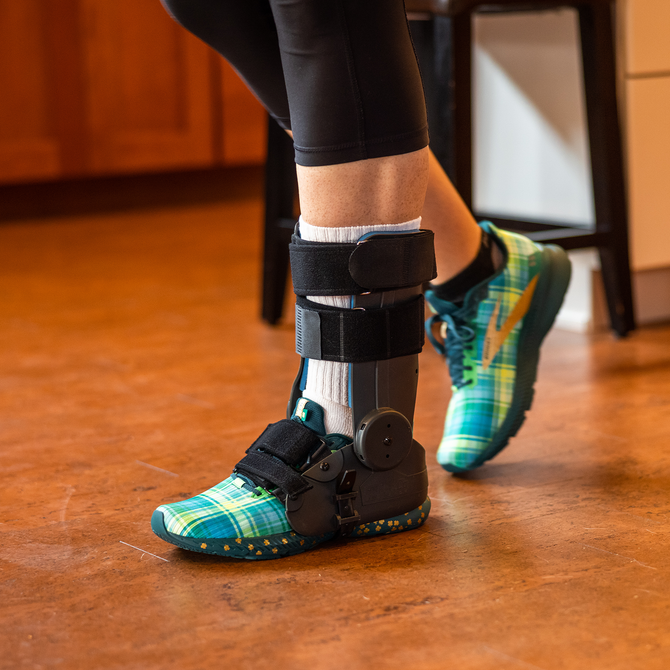
Look at the bottom of a walking boot next to the shoe on your other foot. The difference is obvious. The boot’s thick sole effectively makes one leg longer than the other.
Your body has to compensate for that difference with every step.
Over time, this limb-length discrepancy can alter your gait and affect movement at the knee, hip, and lower back. Research has documented new or worsening secondary-site pain among patients wearing CAM walker boots, particularly in the lower back, opposite hip, and opposite knee.
The size and weight of a walking boot can also make everyday movement more difficult. Walking, climbing stairs, working, and simply getting around can feel different when one foot is inside a bulky, rigid device.
None of this means walking boots are inherently bad. For many injuries, immobilization is an important part of treatment. But supporting one injured joint shouldn’t mean ignoring what’s happening to the rest of the body.
When the Treatment Starts Creating New Problems
The potential effects of walking boots have received attention outside the medical literature, too.
A group of patients filed a class-action lawsuit against a major manufacturer of walking boots alleging that the thick sole of its walking boot created a limb imbalance that contributed to secondary injuries, including knee, hip, and back pain. The lawsuit also alleged that consumers were not adequately warned about those potential risks.
The case highlighted something that can be easy to overlook during recovery: the ankle may be the injury, but the way we treat it can affect the entire body.
It also raises an important question as recovery progresses.
Does every patient need the same amount of immobilization for the entire recovery process?
Recovery Doesn't Always Require an All-or-Nothing Approach
Early after a significant injury, restricting ankle movement may be exactly what the body needs. But recovery changes over time.
As healing progresses, a healthcare provider may determine that a patient is ready to move from greater immobilization toward controlled movement and, eventually, normal activity.
That's where the distinction between a walking boot and an ankle brace becomes important.
A traditional walking boot replaces your shoe and generally restricts ankle movement. Most ankle braces fit inside a shoe and provide support while allowing considerably more movement.
But there is also another approach.
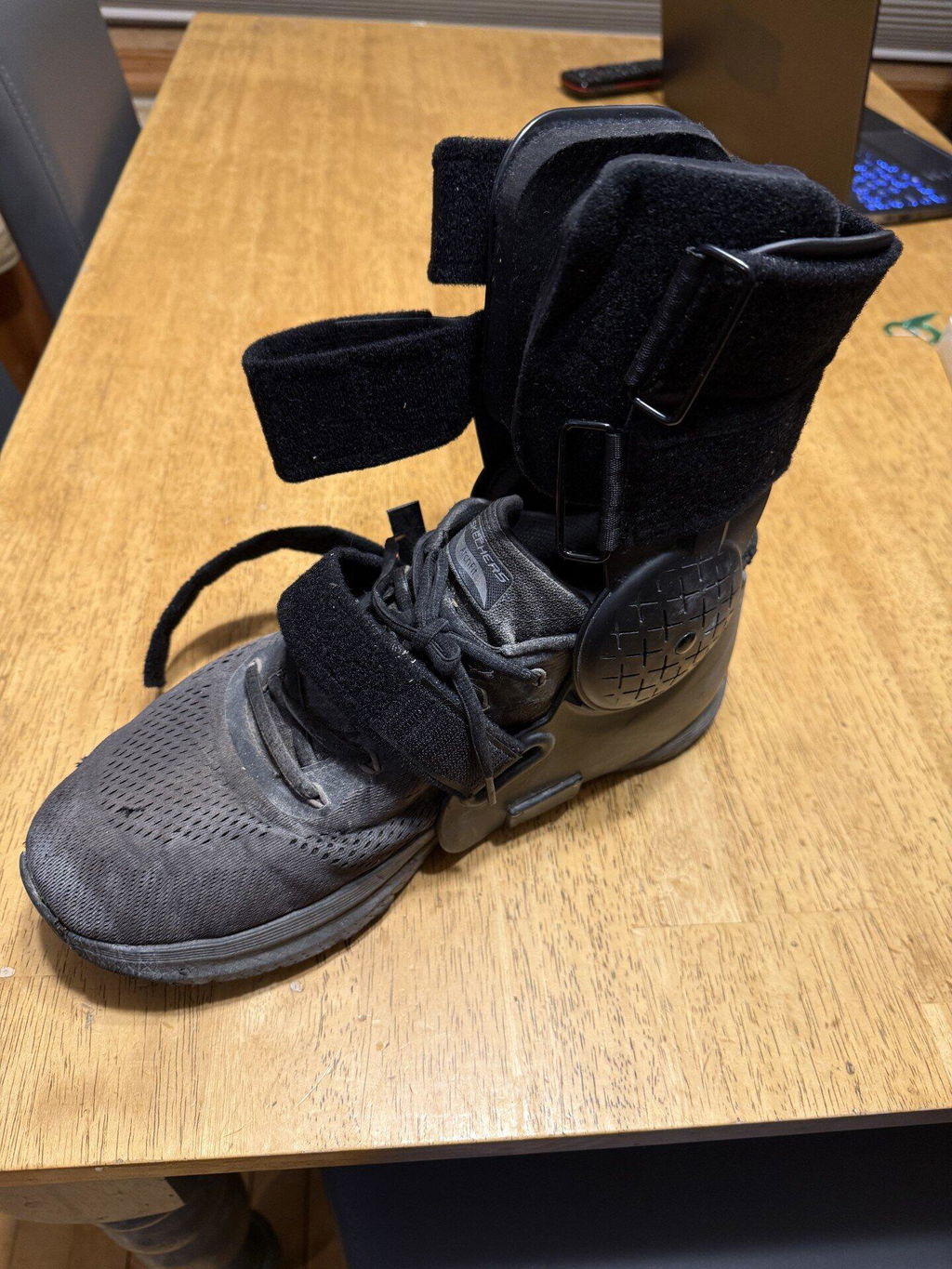
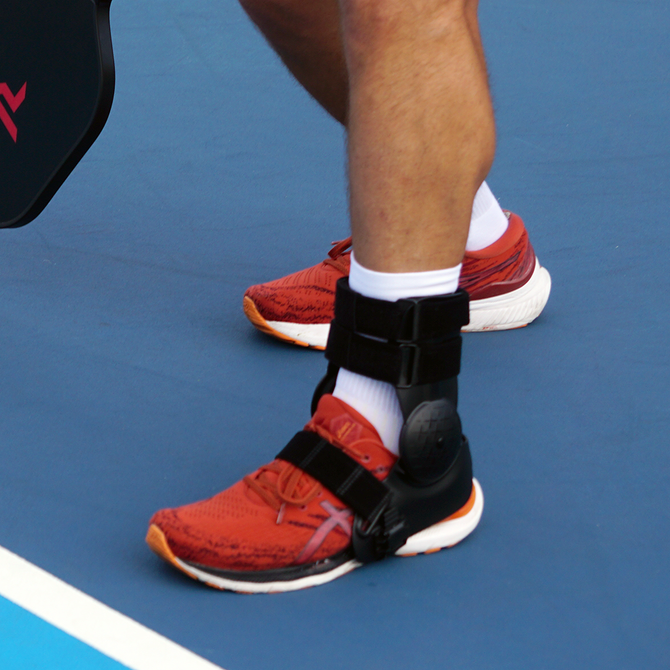
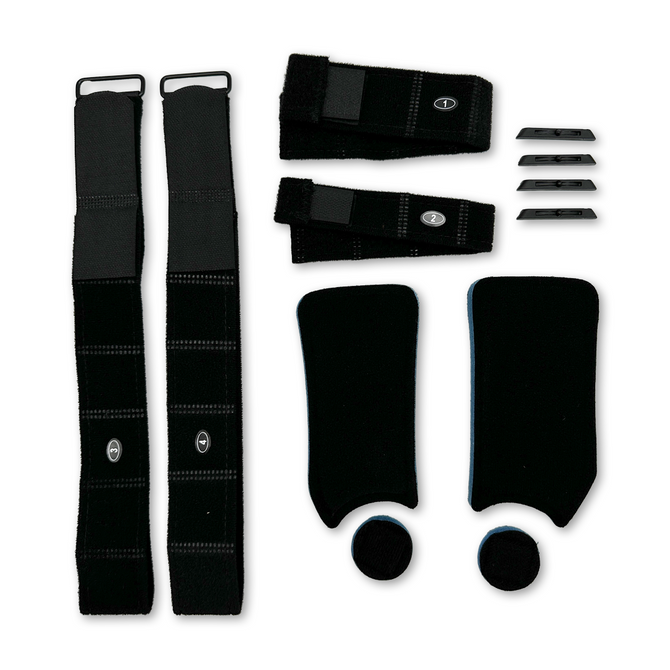
The TayCo RecoverX Brace is worn over your existing shoe and uses an adjustable hinge to change the amount of ankle movement available as recovery progresses. It can be locked at 90 degrees for greater immobilization, limited to 5–10 degrees of motion, or opened for free plantarflexion and dorsiflexion while continuing to control inversion and eversion.
Because it fits over your own supportive footwear, there is no thick walking-boot sole underneath one foot. You can also continue using your existing orthotic when appropriate.
What Does the Research Show?
The question isn't simply whether something is more comfortable than a walking boot. An alternative still needs to provide meaningful ankle support.
Independent biomechanical research at Ball State University compared TayCo Brace with a traditional CAM walking boot and normal footwear during walking and stair negotiation.
The research found that TayCo Brace provided 96% of the ankle stability of a CAM boot during walking, while movement at the knee and hip remained closer to normal footwear than with the walking boot.
That distinction is important because the goal of recovery isn't simply to immobilize an ankle.
It's to provide the injured area with the support it needs while helping the rest of the body move as naturally as the injury allows.
A Different Way to Think About Ankle Recovery
Walking boots remain an important tool for treating ankle sprains, fractures, tendon injuries, and other foot and ankle conditions. For some patients and injuries, they're exactly the right choice.
But recovery isn't static.
The support you need immediately after an injury may not be the support you need several weeks later. If your walking boot is causing knee, hip, back, foot, or ankle pain, talk with your healthcare provider about what you're experiencing and whether your current level of immobilization is still appropriate.
For some patients, transitioning to an alternative to a walking boot may provide the next step between immobilization and returning to normal activity.
The TayCo RecoverX Brace was designed for that progression: substantial ankle support, adjustable range of motion, and an over-the-shoe design that lets you recover in your own footwear.
If you've been prescribed a walking boot or are recovering from a fracture, surgery, or significant ankle injury, consult your healthcare provider before changing your prescribed treatment.