


For most patients, “getting back to normal” means returning to work, walking comfortably, or resuming everyday activities.
For Derek Lewis, it meant freefalling at 180 mph.
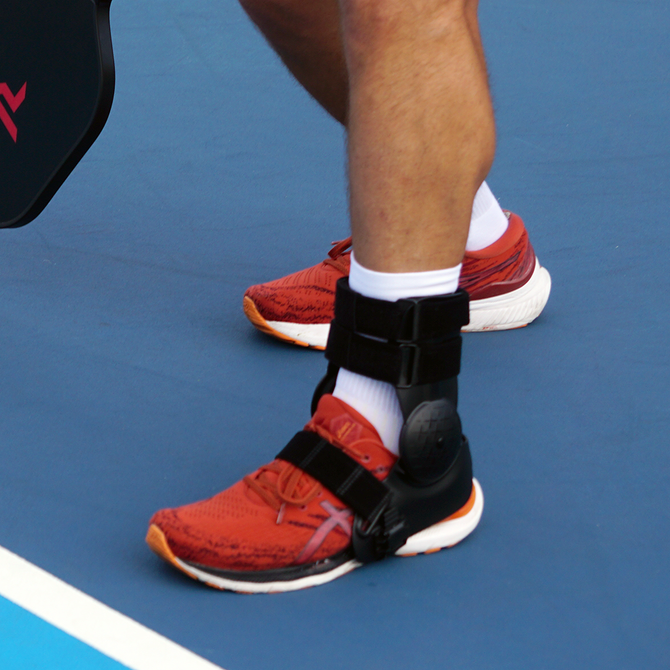
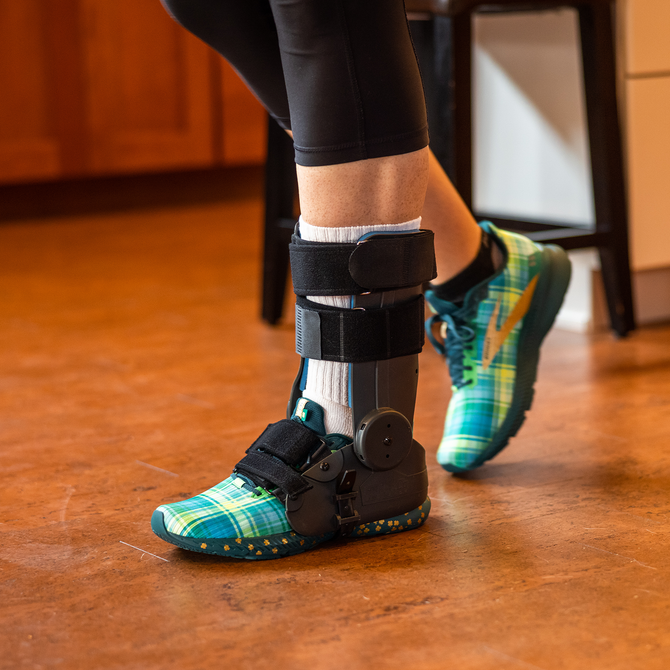
After surgery to repair a dislocated ankle and broken leg, Derek returned to skydiving just over 12 weeks later while wearing two TayCo AthleticX Braces: one on his recovering ankle and one on the opposite side for balance.
Following six weeks of complete non-weight-bearing, Derek transitioned from the recommended surgical boot to the AthleticX Brace and reported no problems during his recovery.
His experience is his own and should not be taken as medical guidance. Patients should always follow the recovery plan established by their healthcare provider.
When “Back to Normal” Means Returning to the Extreme
Derek’s recovery goal was not simply walking without pain. He wanted to return to an activity that places extraordinary demands on the body and requires confidence in every piece of equipment. He was not alone.
“Several other skydivers with ankle injuries have taken pictures of the braces so they can get some too.”
Derek’s story demonstrates how personal and demanding a patient’s definition of recovery can be.

Developed in Partnership With the U.S. Air Force
Long before Derek returned to the sky, TayCo Brace was working with members of the U.S. Air Force to better understand the ankle-support needs of military personnel operating in demanding environments.
The relationship began around 2021, when Master Sergeant Hessen Martinez Cruz, an athletic trainer caring for Air Force service members, discovered TayCo Brace and reached out about using the technology with the people under his care.
That conversation eventually became a larger question:
How could the existing brace be made lighter, more rugged, and better suited to military use?
Through AFWERX-supported research and development projects, TayCo Brace collaborated with military clinicians and Air Force units, including the 351st Special Warfare Training Squadron at Kirtland Air Force Base and the 59th Medical Wing at Joint Base San Antonio-Lackland.
Milestones from those collaborations helped shape the development of the TayCo AthleticX Brace and TayCo CombatX Brace.
Why Outside-the-Boot Support Mattered
Before this work, many service members had limited ankle-support options.
A walking boot could remove someone from training. Taping offered limited support. Traditional inside-the-boot braces could be difficult to fit within combat footwear. In some special-warfare environments, service members would simply train through the pain without additional support.
Earlier parachute ankle braces were also known for being uncomfortable, which contributed to limited adoption and compliance.
The goal of the AFWERX-supported research and development was not simply to create another ankle brace. It was to rethink how external support could function alongside military footwear and equipment.
Engineering for Demanding Environments
The collaboration focused on practical military needs, including:
- Reducing the overall weight of the brace
- Increasing durability for rugged environments
- Removing components that added weight without improving function
- Minimizing potential catch points around the hinges and straps
- Preserving compatibility with military boots
Testing and evaluation also included biomechanical work designed to simulate parachute landing falls. One Ball State University evaluation examined lower-extremity mechanics during landing, helping inform how the brace performed under demanding impact conditions.
Those military-driven priorities did not stay limited to combat boots or training environments. They helped shape a brace built for people who need ankle support without stepping away from the footwear, movement, or activities that matter to them.
For Derek, that meant returning to the sky just over 12 weeks after surgery.
Because “back to normal” looks different for everyone.
Sometimes it means walking into work.
Sometimes it means returning to the field.
And sometimes it means stepping out of an airplane at 180 mph.


