

Searching for an ankle brace usually starts with the condition.
"What's the best brace for an ankle sprain?"
"Do I need a brace for ankle arthritis?"
"What kind of support helps an ankle that keeps rolling?"
Those are reasonable questions, but the diagnosis alone doesn't always tell you which brace you need.
Two people with the same diagnosis can need very different levels of support depending on the severity of the condition, stage of recovery, activity level and movements that need to be controlled.
So instead of starting with a specific product, start with a better question:
What does your ankle need help doing, or not doing, right now?
Ankle sprains
Ankle sprains are among the most common reasons people start looking for a brace.
But "ankle sprain" covers a wide range of injuries.
A mild sprain that allows comfortable weight bearing is very different from a significant ligament injury requiring substantial protection.
During early recovery, the priority may be limiting movement and protecting injured tissue. As healing progresses, the goal often shifts toward restoring movement while maintaining enough stability to reduce the risk of rolling the ankle again.
That means the appropriate brace may change throughout recovery.
Once someone has returned to everyday activity or sports, a brace designed to control inversion and eversion while allowing normal ankle movement may provide ongoing support.
Chronic ankle instability and recurring ankle rolls
Sometimes the initial sprain heals, but the ankle never feels quite the same.
It may repeatedly give way. Uneven ground becomes uncomfortable. You find yourself watching every step on a trail or hesitating during a cut on the field.
For chronic ankle instability, lateral stability becomes especially important.
A brace should provide meaningful resistance to the side-to-side movement associated with ankle rolling without unnecessarily restricting the movement needed for walking and activity.
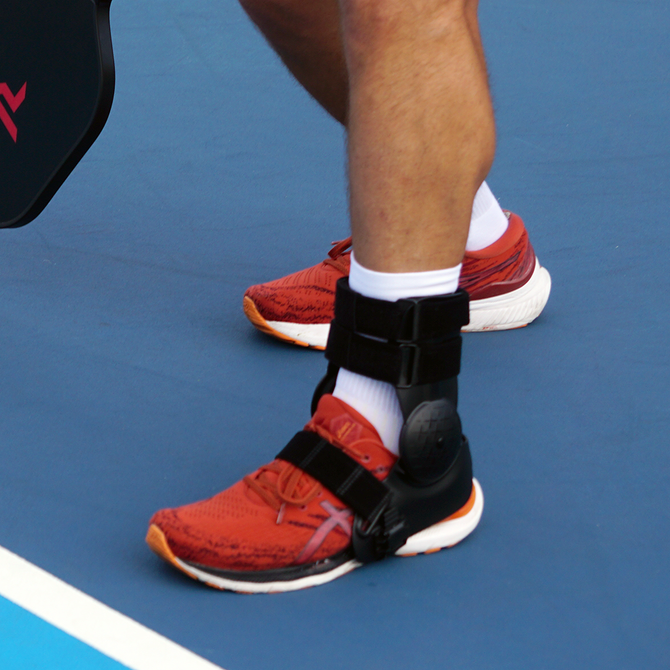
The AthleticX Brace uses an external structure to control inversion, eversion and rotation while allowing plantarflexion and dorsiflexion.
In biomechanical testing, it provided 2.4x the lateral stability of a traditional lace-up ankle brace.
Recurring instability should also be evaluated by a healthcare professional, particularly if the ankle continues to give way despite rehabilitation and bracing.
Ankle fractures
Bracing needs following an ankle fracture depend heavily on the fracture itself and where you are in recovery.
Early treatment may require surgery, casting, immobilization or a walking boot.
Later, as healing progresses and weight bearing is permitted, the objective can change.
You may still need substantial ankle support without needing the same degree of immobilization used earlier in recovery.
That's where adjustable or structured bracing may become relevant.
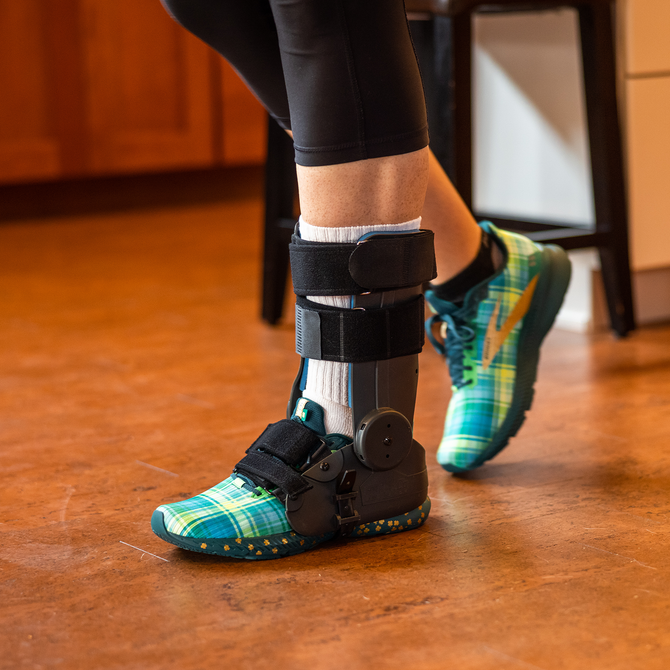
The RecoverX Brace, for example, has three hinge settings that allow the ankle to be locked, given a limited range of motion or allowed to move freely in plantarflexion and dorsiflexion while maintaining external support.
The timing of any transition after a fracture should be determined by the treating healthcare provider.
Achilles tendon injuries
Achilles injuries require particular care because ankle position can directly affect tension on the healing tendon.
An Achilles rupture, for example, has very different bracing requirements during early healing than Achilles tendinitis in an active individual.
Treatment may involve immobilization, heel elevation, controlled range of motion and a staged return to weight bearing depending on the injury and treatment approach.
For that reason, this isn't a condition where choosing a brace based solely on an online recommendation makes sense.
As recovery progresses, however, external bracing may provide an option for continued ankle and hindfoot support while returning to footwear.
Your healthcare provider should determine when that transition is appropriate and what movement should be permitted.
Posterior tibial tendon dysfunction and progressive collapsing foot deformity
The posterior tibial tendon plays an important role in supporting the arch and controlling the foot during walking.
When it becomes dysfunctional, symptoms can include pain along the inside of the ankle, progressive flattening of the arch and difficulty controlling the foot and ankle.
Bracing can play an important role in managing these conditions.
Depending on severity, options may range from relatively simple ankle support to more substantial AFO-style bracing intended to control the ankle and hindfoot.
Footwear compatibility can be particularly important because some traditional orthoses require significant space inside the shoe.
External AFO designs offer another approach by placing much of the structure around the outside of the footwear.
A medical provider can help determine the amount of control required based on the stage and severity of the condition.
Peroneal tendon problems
The peroneal tendons run along the outside of the ankle and help stabilize the foot and ankle during movement.
Irritation or injury can create pain along the lateral ankle and may be associated with instability.
Depending on the underlying problem, a brace that helps control excessive inversion and provides lateral stability may be useful as part of treatment.
But lateral ankle pain isn't automatically a peroneal tendon problem.
Persistent pain, swelling or instability should be properly evaluated before relying on a brace alone.
Ankle arthritis
Ankle arthritis can make everyday movement difficult.
Pain, stiffness and instability can all influence what type of support feels helpful.
Some people may benefit from relatively simple support, while others require more substantial control of ankle and hindfoot motion.
The challenge is often finding enough stability to make walking more comfortable without unnecessarily interfering with daily activity.
Structured ankle bracing or an AFO may be considered depending on the severity of the arthritis, alignment and individual needs.
For someone trying to remain active, footwear and gait should be part of that decision rather than focusing only on how rigid a brace feels.
After ankle fusion
An ankle fusion permanently changes how the ankle moves.
Because motion at the fused joint has been eliminated, surrounding joints and structures may experience different demands during walking.
Bracing after fusion isn't about restoring movement to the fused joint.
Instead, support may be used to improve stability, protect surrounding structures or address other biomechanical needs.
The appropriate solution depends heavily on the individual, which makes provider involvement particularly important.
Foot drop
Foot drop is different from many of the conditions on this list.
The primary problem isn't usually excessive ankle rolling. It's difficulty actively lifting the front of the foot during walking.
That can cause the toes to drag and alter gait.
AFOs designed for foot drop typically help maintain or assist dorsiflexion so the foot can clear the ground during the swing phase of walking.
Because foot drop can result from a variety of neurological, muscular or nerve-related conditions, the underlying cause should be evaluated by a healthcare professional.
The type and amount of assistance required can vary substantially from one person to another.
Neuropathy and balance concerns
Ankle stability isn't only about ligaments.
People with neuropathy or other conditions affecting sensation, strength or balance may have difficulty recognizing or responding to changes in foot position.
In those situations, external support may help provide additional stability during standing and walking.
But bracing is only one part of fall prevention and balance management.
Footwear, strength, vision, medications, home environment and the underlying cause of the balance problem can all matter.
A healthcare provider can help determine whether ankle bracing should be part of a broader strategy.
One diagnosis doesn't equal one brace
This is the most important takeaway.
An ankle sprain doesn't automatically mean a lace-up brace.
An ankle fracture doesn't automatically mean a walking boot.
Foot drop doesn't automatically mean one particular AFO.
The diagnosis tells you what's wrong.
Choosing a brace requires another layer of thinking:
-
How much stability is needed?
-
Which movements should be controlled?
-
Which movements should remain available?
-
Is the person weight bearing?
-
Where are they in recovery?
-
What footwear do they need to use?
-
What activities are they trying to return to?
-
Does the condition require professional fitting or medical oversight?
Those answers are what point toward the right type of support.
Match the support to where you are
Bracing isn't always a permanent decision.
The amount of support someone needs today may be very different from what they need six weeks from now.
That's particularly true during injury recovery.
You may move from substantial protection to controlled movement, then toward everyday activity or sports.
The goal is to match the brace to that stage rather than asking one device to solve every problem from injury through full recovery.
If you're unsure what level of support makes sense, start with your healthcare provider or use our Find Your Brace resources to explore options based on what you're trying to get back to.
Because finding the right brace shouldn't start with the brace.
It should start with what your ankle needs.


