

Athletes ask a lot of their ankles.
Sprint. Stop. Cut. Jump. Land. Change direction. Absorb contact. Do it again.
That's also why an ankle that's been sprained before can be hard to forget about.
Maybe you wear a brace because you've had multiple ankle sprains. Maybe you're returning after your first one. Or maybe you simply want more stability because your sport puts you at higher risk.
Whatever the reason, the challenge is the same:
You want the ankle supported without feeling like you've taken away the movement you need to play.
The right sports ankle brace should find that balance.
Start with stability
Most ankle sprains occur when the ankle rolls inward, or inverts, beyond the range the joint and surrounding tissues can safely control.
For an athlete, that can happen in an instant.
You land on another player's foot. Plant awkwardly during a cut. Get caught in a pile. Hit uneven turf.
That's why lateral stability matters in a sports ankle brace.
A compression sleeve may feel secure around the ankle, but feeling tight and physically resisting an ankle roll aren't the same thing.
More structured braces are designed to mechanically limit unwanted movement.
If preventing another ankle roll is the goal, that's an important distinction.
But you still need to move
More restriction isn't automatically better for sports.
Running, jumping and changing direction all require movement at the ankle, particularly plantarflexion and dorsiflexion.
A brace that limits everything may provide support, but it can also interfere with the movement you're trying to perform.
Ideally, a sports brace controls the movement you don't want while preserving the movement you do.
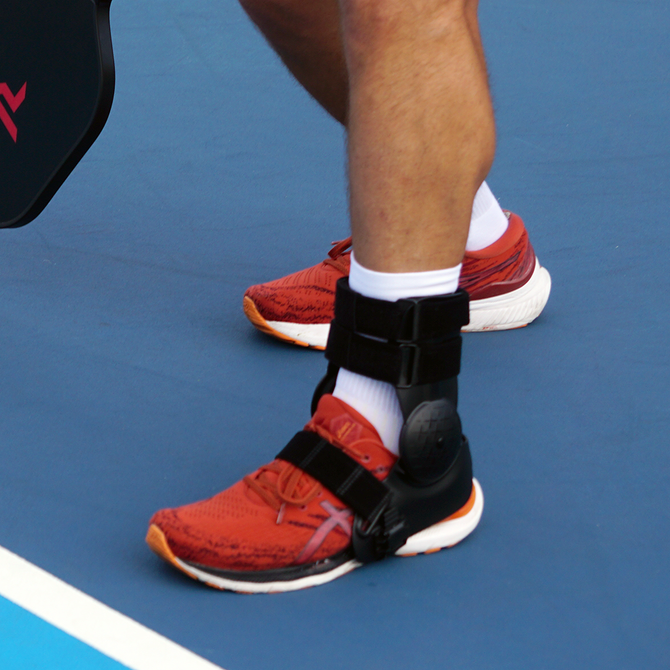
The AthleticX Brace was designed around that idea.
Its external structure controls inversion, eversion and rotational movement while allowing plantarflexion and dorsiflexion.
The ankle can still move forward and backward while the brace helps resist the side-to-side movement associated with many ankle sprains.
How much stability does an athlete actually need?
Not every athlete needs the same brace.
Someone who has never injured an ankle and wants additional protection may have different needs than an athlete with chronic ankle instability or multiple previous sprains.
Your sport matters, too.
A distance runner, volleyball player and offensive lineman aren't asking their ankles to do the same thing.
The best sports ankle brace isn't necessarily the biggest or most rigid option.
It's the one that provides enough stability for your risk and history while still allowing you to perform.
Lace-up vs. structured ankle braces
Lace-up braces are common in athletics for good reason.
They're relatively lightweight, familiar and can provide more support than a simple sleeve. Many also use figure-eight straps to mimic aspects of athletic taping.
More structured braces take a different approach.
Rigid or semi-rigid components physically resist unwanted ankle movement rather than relying primarily on fabric, laces and strap tension.
In biomechanical testing, the AthleticX Brace provided 2.4 times the lateral stability of a traditional lace-up ankle brace.
That doesn't mean every athlete needs more stability.
But for an athlete with a history of ankle sprains or an ankle that repeatedly feels unstable, the amount of lateral control a brace provides can matter.
What about fitting a brace inside a cleat?
This is where sports bracing can get frustrating.
Cleats are usually designed to fit relatively close to the foot. Adding a brace inside can make the cleat tighter, change how the foot sits inside it or require loosening the laces to create more room.
An over-the-shoe brace avoids that problem.
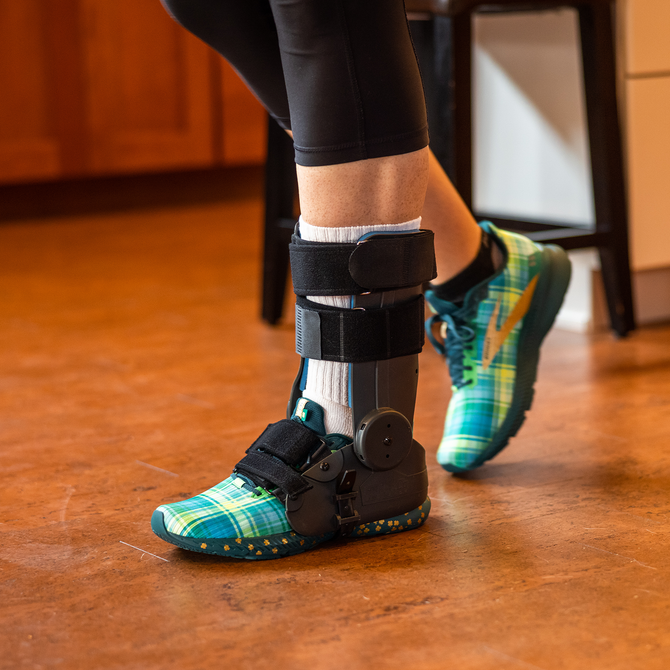
AthleticX Brace is worn around the outside of compatible footwear, including many cleats. The cleat can continue fitting the foot normally while the brace provides its support externally.
For football players in particular, that can be useful when substantial ankle stability is needed without trying to squeeze another layer inside an already snug cleat.
Can you wear an ankle brace for football?
Yes, and ankle bracing has been studied extensively in football and other sports.
Football combines many of the situations that challenge ankle stability: cutting, contact, unpredictable foot placement and other players landing around your feet.
Position can influence those demands as well.
A skill-position player may prioritize unrestricted running and cutting, while a lineman is regularly dealing with contact and bodies around the lower legs.
The same principle applies either way: provide the stability the athlete needs while preserving the movement required to play.
AthleticX Brace can be worn over compatible football cleats and is designed to allow plantarflexion and dorsiflexion while controlling inversion, eversion and rotation.
Basketball and volleyball create a different challenge
In basketball and volleyball, jumping isn't usually the problem.
Landing is.
Coming down on another player's foot is a common mechanism for ankle sprains, and there isn't much time for the athlete to react once the foot begins to roll.
That makes lateral stability especially relevant.
A sports brace can't eliminate the possibility of an awkward landing, but it can provide additional resistance against excessive ankle movement when one happens.
Can ankle braces help prevent sprains?
Research supports ankle bracing as one strategy for reducing ankle sprain risk in athletes.
This can be particularly relevant for athletes who have already had an ankle sprain, since a previous injury increases the likelihood of another.
But a brace shouldn't be the entire prevention plan.
Strength, balance and proprioceptive training all play important roles in helping an athlete control the ankle.
A good way to think about it is:
Training improves the athlete's ability to control the ankle. Bracing provides additional external protection when things don't go according to plan.
Those approaches don't have to compete with each other.
Should you keep wearing a brace after returning from an ankle sprain?
For many athletes, returning to play happens before they completely forget about the injury.
The ankle may be medically cleared, but cutting, jumping or taking contact can still feel different.
Continued bracing may provide additional stability during that transition, particularly for athletes at higher risk of reinjury.
How long you should brace depends on the injury, your history, your sport and the recommendations of your healthcare team.
And the brace you use during recovery isn't necessarily the one you should compete in.
A recovery brace may prioritize protection and controlled movement. A sports brace should be designed around the demands of athletic activity.
What should you look for in a sports ankle brace?
Strip away the marketing claims and focus on what matters for your activity.
Look for a brace that provides:
-
Lateral stability to resist unwanted ankle rolling
-
Enough movement to run, jump and change direction
-
A secure fit that stays in position during activity
-
Compatibility with your footwear
-
Comfort you can realistically tolerate through practices and games
-
Durability for repeated use
And if you've had a significant injury or repeated ankle sprains, involve your athletic trainer, physical therapist or healthcare provider in the decision.
Support should help you play, not remind you it's there
The best sports equipment tends to disappear once the game starts.
An ankle brace should be no different.
You shouldn't spend every cut thinking about your ankle. You shouldn't have to constantly adjust your brace. And you shouldn't have to choose between feeling supported and moving like an athlete.
The goal is enough stability to help protect the ankle while letting you focus on everything else happening on the field or court.
Because once the game starts, the last thing you want to be thinking about is your brace.
Looking for more stability without putting a brace inside your cleat or shoe? Explore the AthleticX Brace, built for athletes who want to stay in the game.


