

If you've shopped for an ankle brace, there's a good chance you've come across a lace-up design.
They've been used for years in athletic training rooms, clinics and everyday life. They're relatively lightweight, adjustable and provide more support than a basic compression sleeve.
But they're not the only way to stabilize an ankle.
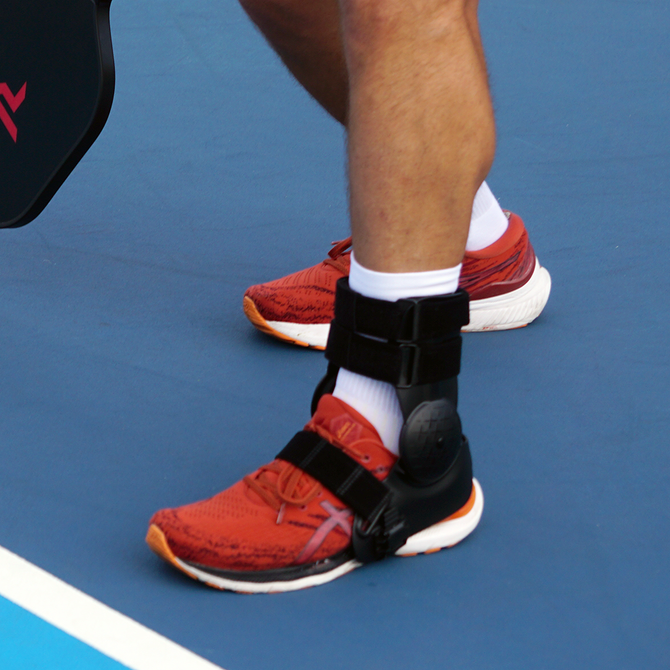
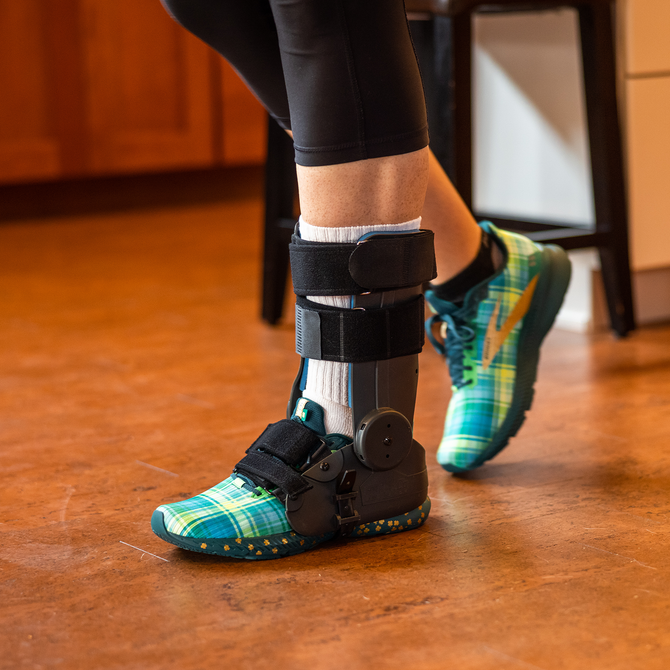
Rigid and semi-rigid braces use structural components rather than primarily relying on fabric, laces and straps. Some fit inside the shoe. Others, including TayCo Brace products, are worn around the outside of it.
Neither approach is automatically right for everyone.
The difference comes down to what you're trying to control and how much stability you need.
How does a lace-up ankle brace work?
A lace-up brace typically wraps around the ankle and uses laces to create compression and support.
Many designs also include straps that cross around the ankle in a figure-eight pattern, similar to an athletic taping technique.
Tightening the brace creates resistance against ankle movement, particularly side-to-side motion.
That makes lace-up braces a popular option for athletes, people returning from ankle sprains and those looking for everyday ankle support.
They're also flexible enough to fit inside many athletic shoes.
How does a rigid ankle brace work?
A rigid or semi-rigid ankle brace adds structural components to physically resist unwanted ankle movement.
Instead of depending primarily on how tightly fabric is wrapped around the ankle, the structure of the brace itself helps control motion.
That can provide greater mechanical stability.
But "rigid" can be a misleading word.
A rigid brace doesn't necessarily mean your ankle is locked in place.
Well-designed braces can use rigid components to control specific movements while allowing others.
For example, the AthleticX Brace controls inversion, eversion and rotational movement while allowing plantarflexion and dorsiflexion.
The structure is rigid.
The ankle isn't.
Which provides more lateral stability?
If your biggest concern is an ankle that repeatedly rolls, lateral stability becomes especially important.
This is one area where brace construction can make a significant difference.
In biomechanical testing, AthleticX Brace provided 2.4 times the lateral stability of a traditional lace-up ankle brace.
That's a meaningful distinction for someone with chronic ankle instability, repeated ankle sprains or activities that regularly expose the ankle to unpredictable movement.
It doesn't mean everyone needs the most lateral stability possible.
Someone looking for mild support may find a lace-up brace perfectly appropriate.
But if you're wearing a brace specifically because your ankle continues to roll, understanding how much the brace actually resists that movement matters.
Does more structure mean less ankle movement?
Not necessarily.
This is where it's useful to separate movement from instability.
Your ankle needs plantarflexion and dorsiflexion when you walk, run, climb stairs, jump and perform countless other activities.
Inversion and eversion are different movements.
A structured brace can be designed to provide substantial resistance to side-to-side motion while leaving forward and backward ankle movement available.
That's the approach used by AthleticX Brace.
So the choice isn't necessarily:
More support or more movement.
Depending on the design, you can have substantial lateral support while preserving the movement you need for activity.
Shoe fit is one of the biggest differences
Lace-up braces are generally worn inside the shoe.
That can work well, but the brace has to share space with your foot.
Depending on the shoe and brace, you may need to loosen the laces, adjust the insole or use footwear with more room.
An external brace takes the opposite approach.
AthleticX Brace is worn around the outside of compatible shoes or cleats. The shoe continues fitting directly around your foot, while the brace provides its structure externally.
For people who have trouble fitting a brace inside their shoe, that's a significant difference.
It's also particularly useful with snug athletic footwear and certain work or hiking shoes.
Which is better for sports?
Both styles can work for athletes.
Lace-up braces are widely used because they're relatively lightweight and familiar. They also work across a wide range of sports and footwear.
A more structured brace may be worth considering when the athlete needs greater lateral stability, particularly after previous ankle sprains or with chronic instability.
Footwear matters here, too.
If adding a structured brace inside a tight cleat creates fit problems, an over-the-shoe design can move that structure outside the footwear.
The right choice should provide the level of stability the athlete needs without unnecessarily interfering with how they play.
Which is better for chronic ankle instability?
If your ankle repeatedly rolls or gives way, focus on how well the brace controls the movement causing the problem.
A lace-up brace may provide enough support for some people.
Others may benefit from the additional mechanical control of a rigid or semi-rigid brace.
Chronic instability should also be evaluated rather than managed indefinitely with a brace alone. Repeated ankle sprains can lead to ongoing ligament, tendon or cartilage problems, and rehabilitation may be needed to address strength, balance and proprioception.
Bracing provides external support.
It doesn't replace understanding why the ankle continues to give way.
What about comfort?
Comfort is personal.
Some people prefer the softer feel of a lace-up brace. Others dislike having extra material compressed between their foot and shoe.
A rigid brace may sound less comfortable, but moving that structure outside the shoe changes the experience considerably.
With an over-the-shoe design, the padding of the brace contacts the lower leg while the rigid structure sits outside the footwear rather than against the foot inside the shoe.
Whichever style you choose, proper sizing and fitting matter.
A brace that provides excellent support but is uncomfortable enough that you stop wearing it isn't accomplishing much.
Is a rigid brace harder to put on?
Not necessarily, although the process is different.
A lace-up brace needs to be positioned, laced and strapped each time.
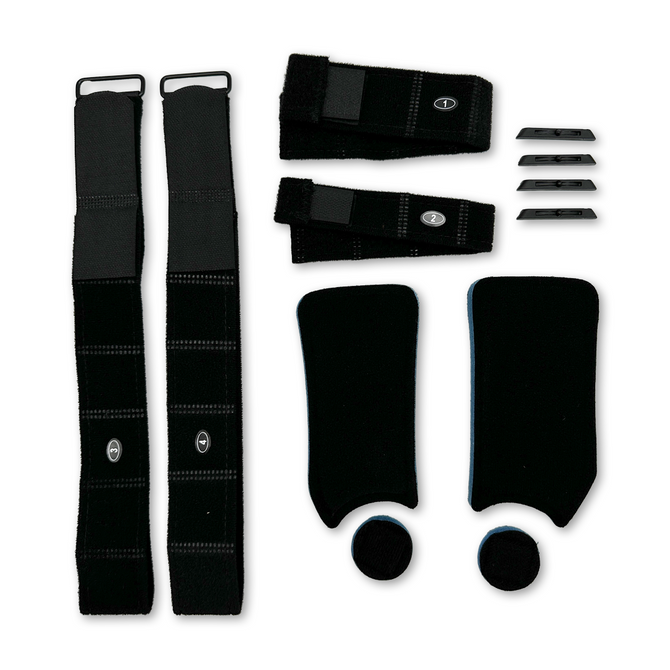
An external brace is placed around the shoe and lower leg and secured with its strapping system.
Once someone is familiar with either design, putting it on becomes routine.
If you'll be using the brace frequently, ease of use is worth considering alongside stability and comfort.
Which ankle brace should you choose?
Start with why you're wearing one.
A lace-up brace may be a good fit if you:
-
Want moderate ankle support
-
Prefer a softer, flexible design
-
Have enough room inside your footwear
-
Are comfortable adjusting laces and straps
A more structured brace may be worth considering if you:
-
Need greater lateral stability
-
Have chronic ankle instability
-
Have a history of repeated ankle sprains
-
Want structural resistance against unwanted ankle movement
An external structured brace may be especially useful if you:
-
Don't want a brace taking up room inside your shoe
-
Wear compatible cleats, hiking shoes or work footwear
-
Want substantial lateral support while maintaining plantarflexion and dorsiflexion
The important thing isn't whether a brace has laces or rigid components.
It's whether its design matches the problem you're trying to solve.
Support where you need it. Movement where you want it.
Lace-up braces have helped athletes and active people support their ankles for decades, and they're still a good solution for many people.
Structured bracing simply provides another option.
If you need more substantial control of an ankle that repeatedly rolls, you don't necessarily have to accept a brace that restricts all ankle movement or takes up significant room inside your shoe.
Look at the movement the brace controls, the movement it preserves and how it works with the footwear you actually use.
That's a much better way to choose ankle support than simply deciding between "soft" and "rigid."
Looking for an alternative to a traditional lace-up brace? Explore the AthleticX Brace and its over-the-shoe approach to lateral ankle stability.


