

You leave the doctor's office with a walking boot strapped to your leg and a plan for your injury.
Then you get home.
Suddenly, simple things require a little more thought. Stairs feel different. Your two legs aren't the same height. Getting dressed takes longer. Your normal walking pace is gone. Even navigating your own house can feel surprisingly awkward.
A walking boot can be an important part of protecting an injury while it heals. But knowing why you're wearing one doesn't necessarily prepare you for what living in one is actually like.
Here's what you can expect along the way.
The first few days take some getting used to
There's no particularly graceful way to learn how to walk in a boot.
The sole is thicker than your normal shoe. Your ankle doesn't move the way you're used to. Your stride changes, and you may find yourself walking more slowly or deliberately.
That's normal. You're asking your body to move differently while also dealing with an injury.
Follow the weight-bearing instructions from your healthcare provider, especially early in recovery. Depending on your injury, you may be able to put full weight through the boot, gradually increase weight bearing or need crutches or another assistive device for a period of time.
Don't let the fact that you can walk in a walking boot convince you to do more than you've been cleared to do.
Your other shoe matters more than you might think
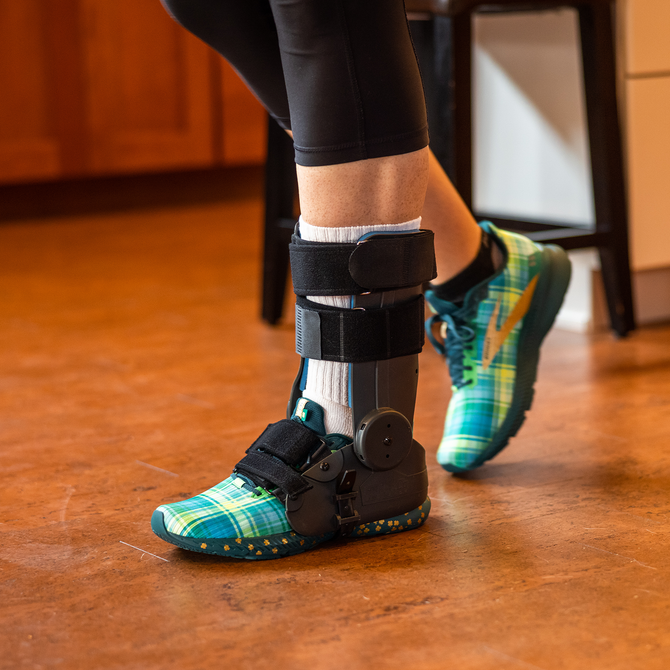
One of the first things many people notice is that the walking boot makes one leg feel longer than the other.
That's because it does.
The thick sole elevates the injured side compared with a normal shoe. What you wear on the opposite foot can make that difference more or less noticeable.
A supportive shoe with a thicker sole may help. There are also shoe-leveling products designed specifically to compensate for the height of a walking boot.
The goal is to avoid spending weeks walking as though one leg is significantly longer than the other.
You may start feeling it somewhere other than your ankle
Your ankle isn't the only joint involved in walking.
When a boot limits ankle movement and changes the height of one leg, your knee, hip, pelvis and back can all adapt to keep you moving.
For some people, that can lead to soreness or pain somewhere other than the original injury.
If you start noticing new knee, hip or back discomfort, don't assume it's simply part of the process. Mention it to your healthcare provider.
We've taken a deeper look at why this happens in The Hidden Danger of Walking Boots, including research into how walking boots can affect gait and other joints.
Stairs become their own adventure
You'll probably become much more aware of how many stairs are in your life.
Walking boots restrict the ankle movement you normally use to climb and descend stairs. Add the extra weight and height of the boot, and a staircase you've walked a thousand times can suddenly require concentration.
Use a handrail when available and follow any instructions you've received for navigating stairs safely, particularly if you're also using crutches.
And don't rush.
A few extra seconds on the stairs are a pretty good trade for not reinjuring yourself.
Everyday routines may need some temporary adjustments
The challenge of a walking boot isn't usually one dramatic inconvenience. It's all the little ones.
Getting pants over it.
Carrying something while navigating stairs.
Standing long enough to cook dinner.
Walking across a parking lot.
Working an entire shift on your feet.
Finding a comfortable position on the couch.
Keeping the boot dry when it's raining.
Recovery happens while the rest of life keeps moving, so it's worth thinking ahead about where you can make things easier on yourself.
Move frequently used items within reach. Give yourself more time to get places. Sit down for tasks you would normally do standing. Accept help when it makes sense.
You're not trying to prove that the boot doesn't affect you. You're trying to give your injury a chance to heal.
Work can be one of the biggest challenges
Returning to work depends heavily on what you do.
Someone who works at a desk may be able to return relatively quickly with a few accommodations. Someone who spends the day walking, climbing, lifting or working on uneven surfaces has a very different challenge.
Footwear requirements can complicate things further. Some jobs require safety shoes, closed-toe footwear or work boots that aren't compatible with a traditional walking boot.
Talk with your healthcare provider and employer about what your job actually requires rather than treating "return to work" as a simple yes-or-no decision.
Sometimes the question isn't whether you can work. It's what needs to change temporarily so you can work safely.
Don't mistake less pain for a healed injury
This can be one of the harder parts of recovery.
You start feeling better.
The swelling goes down. Walking gets easier. Maybe the ankle barely hurts inside the boot anymore.
Naturally, you start wondering why you're still wearing it.
Feeling better is a good sign, but pain isn't the only measure of healing. Bone, ligament and tendon healing all take time, and the protection provided by the boot may be part of the reason you're feeling better in the first place.
Follow the timeline and progression recommended by your healthcare provider rather than using pain alone to decide when you're finished with the boot.
Eventually, the goal starts to change
Early in recovery, the priority is often straightforward:
Protect the injury.
As healing progresses, the conversation can begin to shift.
How much movement can you safely introduce?
How much support do you still need?
When can you return to your normal shoe?
When should you start strengthening or physical therapy?
When can you return to work, exercise or sports?
At some point, recovery becomes less about simply protecting the ankle and more about helping it safely return to what you need it to do.
That's an important transition.
Getting out of the boot doesn't necessarily mean you're done
The day you stop wearing a walking boot can feel like the finish line.
Often, it isn't.
Depending on the injury, the next stage may include physical therapy, strengthening, range-of-motion work, supportive footwear or some form of ankle bracing.
Some people can transition directly back into a normal shoe. Others still need substantial support but no longer need the same level of immobilization.
That middle ground is worth talking about with your healthcare provider.
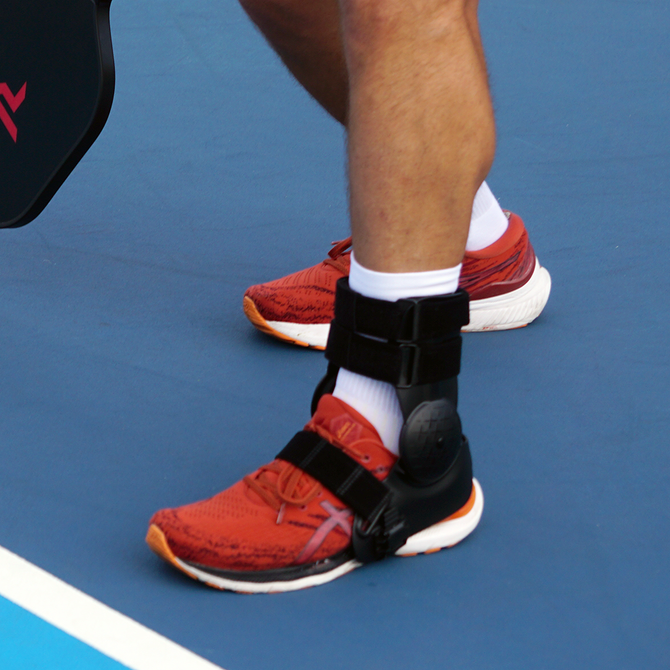
Traditional ankle braces, ankle-foot orthoses and over-the-shoe recovery braces can all play different roles depending on the injury and the amount of support required.
The right next step is the one that matches where you are in recovery.
Recovery is a progression
Nobody wants to spend longer in a walking boot than necessary.
But the goal isn't simply to get out of it.
The goal is to protect your injury when it needs protection, gradually restore movement when it's appropriate and eventually get back to walking, working and doing the things you enjoy with confidence.
The support you need on day one may look very different from what you need several weeks later.
That's progress.
Getting close to the end of your time in a walking boot? Read our guide to transitioning out of a walking boot and what may come next.


