

For athletic trainers, the question usually isn't whether ankle bracing works.
It's who to brace, when to brace and what type of brace makes sense for the athlete in front of you.
A defensive lineman with a history of recurrent ankle sprains has different needs from a volleyball player returning from a first-time lateral sprain. An athlete who needs prophylactic support for an entire season presents a different challenge from one you're trying to get safely through today's practice.
And then there are the practical realities.
Does it fit the cleat? Does the athlete tolerate it? Does it restrict movement? How quickly can you get it on? Will the athlete actually wear it?
The best bracing strategy has to work both biomechanically and in the real world.
Previous injury should get your attention
A history of ankle sprain is one of the most important risk factors for future ankle injury.
That makes athletes with previous sprains an obvious population to consider for additional support, particularly when they're returning to sports that involve cutting, jumping, contact or unpredictable foot placement.
Research on prophylactic ankle bracing has repeatedly demonstrated reductions in ankle sprain incidence among athletes, with particularly meaningful benefits in previously injured populations.
Bracing isn't a replacement for rehabilitation. Strength, balance and proprioceptive training remain important.
But those interventions and external support don't need to be treated as competing strategies.
Rehabilitation improves the athlete's capacity to control the ankle. A brace provides another layer of protection when the demands of sport exceed that capacity.
Start with the movement you need to control
For lateral ankle instability, simply putting material around the ankle isn't the goal.
Controlling unwanted motion is.
That makes the mechanical characteristics of the brace more useful than broad categories like "soft" or "rigid."
Consider:
-
How much inversion and eversion does the brace allow?
-
Does it provide rotational control?
-
What happens to plantarflexion and dorsiflexion?
-
Does support change as straps or materials loosen during activity?
-
Does the brace stay properly positioned through a practice or game?
For an athlete who needs substantial lateral stability, the ideal solution provides meaningful resistance to the problematic movement without unnecessarily restricting the sagittal-plane motion needed for performance.
Stability and mobility don't have to be opposites
Athletes still need their ankles to move.
Running, accelerating, decelerating and jumping all require plantarflexion and dorsiflexion. Simply maximizing restriction isn't the objective when the athlete is competing.
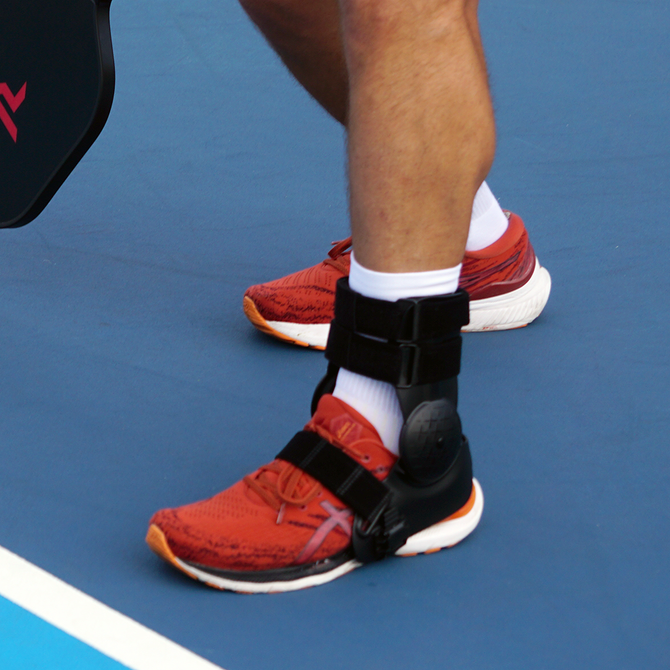
The AthleticX Brace uses an external rigid structure to control inversion, eversion and rotation while allowing plantarflexion and dorsiflexion.
In biomechanical testing, AthleticX Brace demonstrated 2.4 times the lateral stability of a traditional lace-up ankle brace.
For an athlete with chronic instability or a significant history of ankle sprains, that additional lateral control can provide an option between a traditional soft brace and restricting movement more broadly.
Bracing vs. taping isn't always an either-or question
Athletic trainers know the advantages of tape.
It's familiar. It's customizable. You can adjust the application to the athlete and the situation. And when it's done well, taping can provide meaningful ankle support.
It also requires time, skill and materials every time the athlete needs support.
The support provided by tape can change as the athlete warms up, sweats and moves. Across an entire season, repeated applications also create a significant material and labor commitment.
Reusable bracing changes that equation.
Once properly fitted, the athlete can use the same device repeatedly with less hands-on time from the athletic training staff.
That doesn't make bracing the answer for every athlete. There will always be situations where taping makes sense.
The practical question is whether you're repeatedly taping the same athlete to accomplish something a reusable brace could provide more consistently.
Cleat fit matters more than it looks on paper
One of the limitations of traditional sports bracing is simple: everything has to fit inside the shoe or cleat.
That's easier in some footwear than others.
Football cleats in particular can leave limited room for a brace. Adding material inside may require loosening the cleat or changing how the foot sits within it.
External bracing approaches the problem differently.
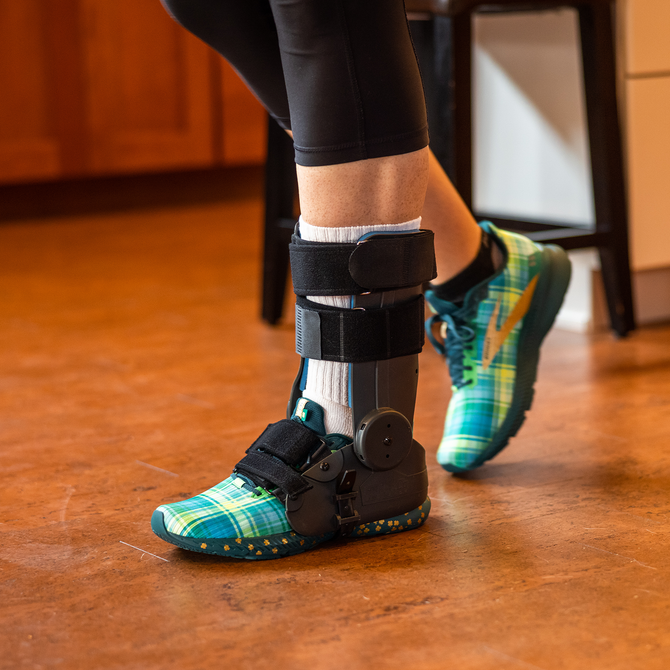
AthleticX Brace is worn over compatible cleats. The cleat remains directly fitted to the athlete's foot while the brace provides support around the outside of the footwear.
That can be especially useful when an athlete needs substantial lateral stability but doesn't have room inside the cleat for a more structured brace.
Football creates its own bracing demands
Football combines nearly every challenge associated with ankle injuries.
Cutting. Contact. Piles. Unpredictable foot placement. Players landing on each other. Different surfaces. Different positional demands.
And the brace that makes sense for a wide receiver may not be the same solution you'd choose for an offensive lineman.
For skill positions, maintaining movement and minimizing interference with speed and cutting may be the priority.
For linemen and other athletes repeatedly exposed to contact around the lower extremity, substantial stability may carry more weight in the decision.
The useful question isn't simply, "What's the best football ankle brace?"
It's, "What does this athlete need the brace to control, and what movement do we need to preserve?"
Return to play is different from injury recovery
An athlete can be ready to leave a recovery device without being ready to compete without support.
That's an important distinction.
During early recovery, the priority may be protecting healing tissue and controlling movement. As rehabilitation progresses, the athlete begins loading the ankle, restoring range of motion, rebuilding strength and eventually introducing sport-specific demands.
The bracing strategy should progress, too.
A recovery-oriented device isn't necessarily appropriate for competition.
Once an athlete is cleared for return to sport, a brace designed specifically for athletic movement can provide continued external support without carrying over unnecessary restrictions from the recovery phase.
For athletes with previous sprains or persistent instability, that support may continue well beyond the initial return-to-play period.
Don't overlook confidence
Physical readiness and psychological readiness don't always arrive on the same day.
An athlete can pass objective measures and still hesitate during the first hard cut, contested landing or full-contact practice.
That hesitation matters.
A brace can't manufacture confidence, but appropriate external support can help remove one variable from the athlete's mind while they rebuild trust in the ankle.
Ideally, the athlete eventually stops thinking about the brace altogether.
Sideline practicality matters
A solution can perform exceptionally well in a controlled environment and still be a poor fit for an athletic training room.
Consider the full workflow:
How long does fitting take?
Can you quickly fit the athlete and make adjustments?
Can the athlete manage it independently?
Once properly fitted, can they put it on without needing an AT every time?
Does it work with their existing footwear?
A brace isn't particularly useful if it requires changing the cleat or shoe the athlete relies on.
Can it be reused?
For athletes who need support through an entire season, durability and repeatability matter.
Will the athlete actually wear it?
The most technically impressive brace in the cabinet provides zero protection if the athlete leaves it there.
These aren't secondary considerations. They're part of whether a bracing program succeeds.
Think beyond the individual athlete
At the program level, ankle support also becomes an operational decision.
If you're taping multiple athletes every day, the calculation includes more than the price of tape.
It includes staff time, supplies, consistency of application and the number of athletes requiring ongoing support.
Reusable braces require an upfront investment, but they can make sense for athletes who would otherwise require repeated taping or bracing throughout a season.
That doesn't mean replacing every tape job with a brace.
It means identifying the athletes for whom repeatable, substantial external support makes sense.
A practical framework for choosing an ankle brace
When evaluating options, start with the athlete rather than the product.
Ask:
-
What's the history? First injury, recurrent sprains or chronic instability?
-
What's the goal? Prevention, return to play or ongoing stability?
-
What movement needs to be controlled?
-
What movement needs to remain available?
-
What footwear does the athlete use?
-
What are the specific demands of the sport and position?
-
Will the athlete consistently wear the solution?
Those questions narrow the field much more effectively than simply looking for the brace with the most support.
The best brace is the one that solves the athlete's problem
Athletic trainers don't need another piece of equipment promising "maximum support."
You need to know what the brace actually controls, what movement it preserves and whether it works for your athlete in their sport.
For some athletes, taping is the right solution.
For others, a lace-up brace provides enough support.
And for athletes who need more substantial lateral stability without sacrificing plantarflexion and dorsiflexion, external bracing provides another option.
The goal isn't to put every athlete in the same brace.
It's to give the right athlete the right amount of support so they can spend less time thinking about the ankle and more time playing.
Explore the AthleticX Brace for over-the-cleat ankle stability, or contact Team TayCo Brace to discuss bracing options for your athletic program.


